

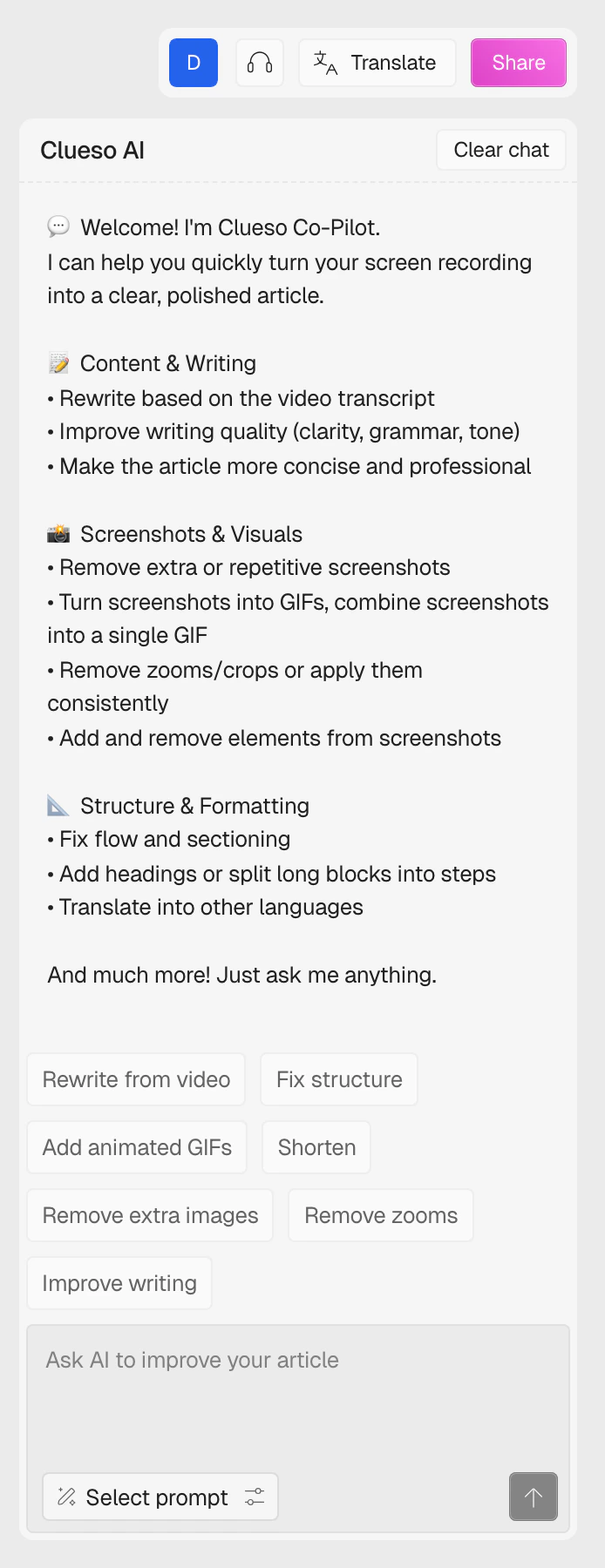
Quick chat support
Use Clueso copilot for real-time help with questions and information gathering. To start, enter your message or query in natural language in the chat box at the bottom of the panel. Clueso copilot processes your request and replies in the same conversation, whether you’re looking for an explanation, summary, or document restructuring. If something’s unclear, continue the thread — Clueso copilot keeps track of context so follow-up questions flow naturally.Example uses
- Request summaries of long documents
- Clarify project steps or technical terms
- Ask how to improve the wording for a specific section
One-click prompts
Above the chat input you’ll see a row of suggestion pills. These are common edits packaged as one-click prompts — useful when you don’t want to type out the full instruction.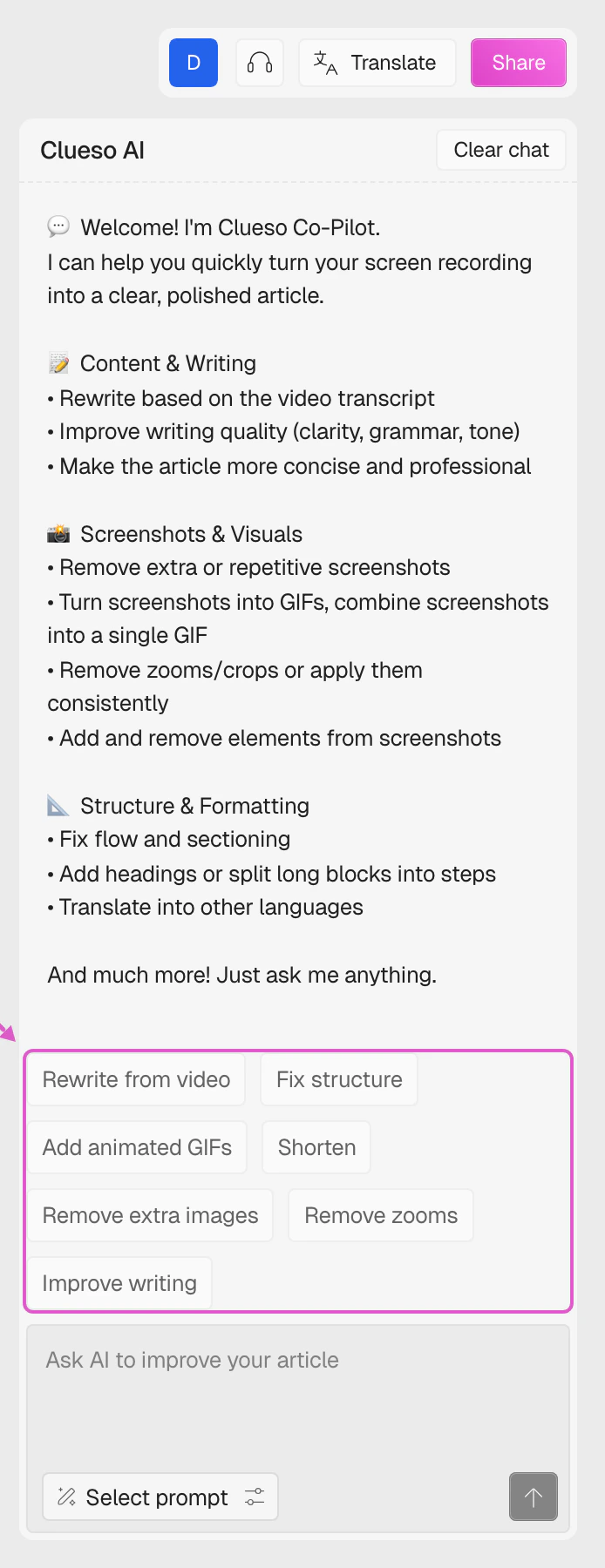
- Rewrite from video — rewrites the article based on the current video transcript
- Fix structure — reorganises sections and improves the flow
- Add animated GIFs — turns key screenshots into GIFs
- Shorten — trims unnecessary detail while keeping the essentials
- Remove extra images — strips redundant screenshots
- Remove zooms — clears any zoom effects applied to screenshots
- Improve writing — fixes grammar and tightens the prose
Screenshot editing
Clueso copilot can also edit screenshots directly from chat. Describe the change you want in plain language — for example, ask to blur confidential data, highlight key sections, or add annotations — and the copilot applies it inline.Example workflow
- Securely blur email addresses or personal info in a screenshot before sharing
- Highlight action buttons for tutorials and guides
- Mark up product interfaces to communicate a problem or suggestion
Formatting and rewriting
When text needs cleaning up or reorganising, type your instruction into the chat and the copilot will rewrite it in place.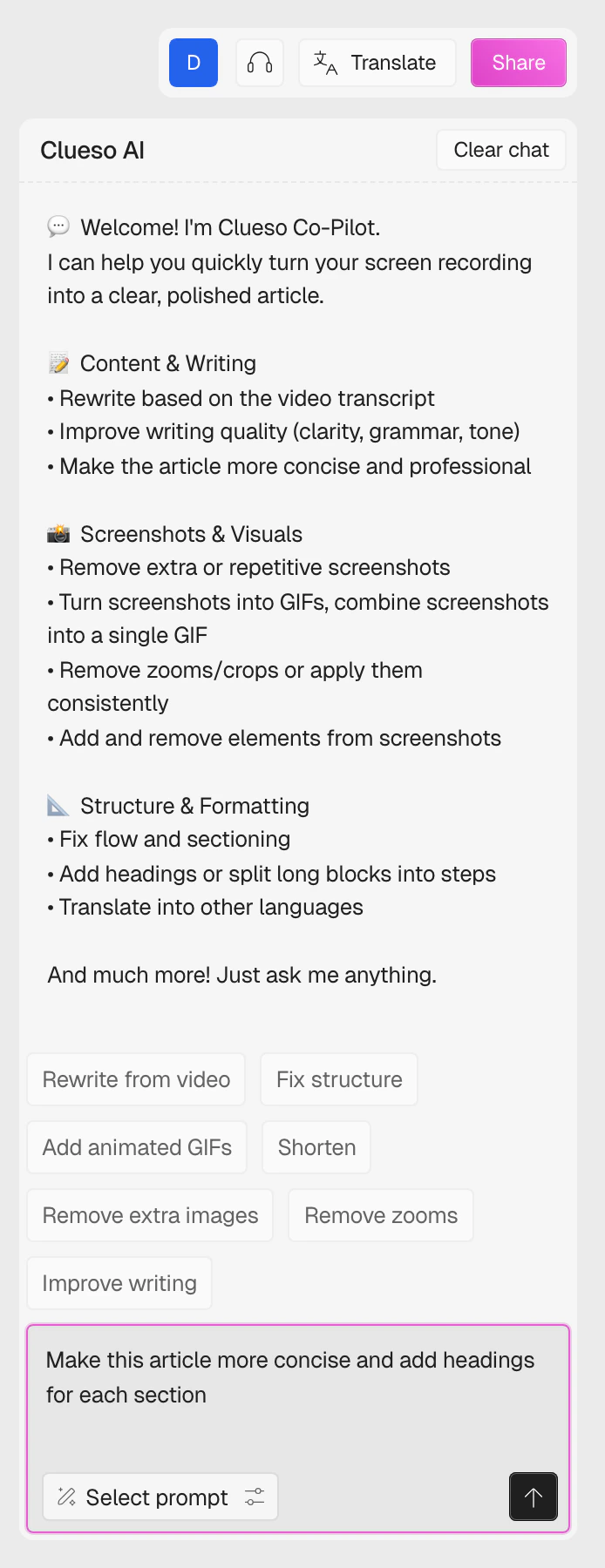
What copilot can do
- Add clarity with headings and bullet points
- Correct grammar and punctuation
- Rewrite sections for brevity or tone
- Summarise lengthy passages
Tips for best results
- Be specific about what you want to achieve
- Provide context for better understanding
- Use follow-up questions to refine results
- Review outputs before finalising