

Opening the Article Prompt Hub
In the article editor, click the Select prompt button at the bottom of the Clueso AI chat panel. This opens the Prompt hub: articles modal.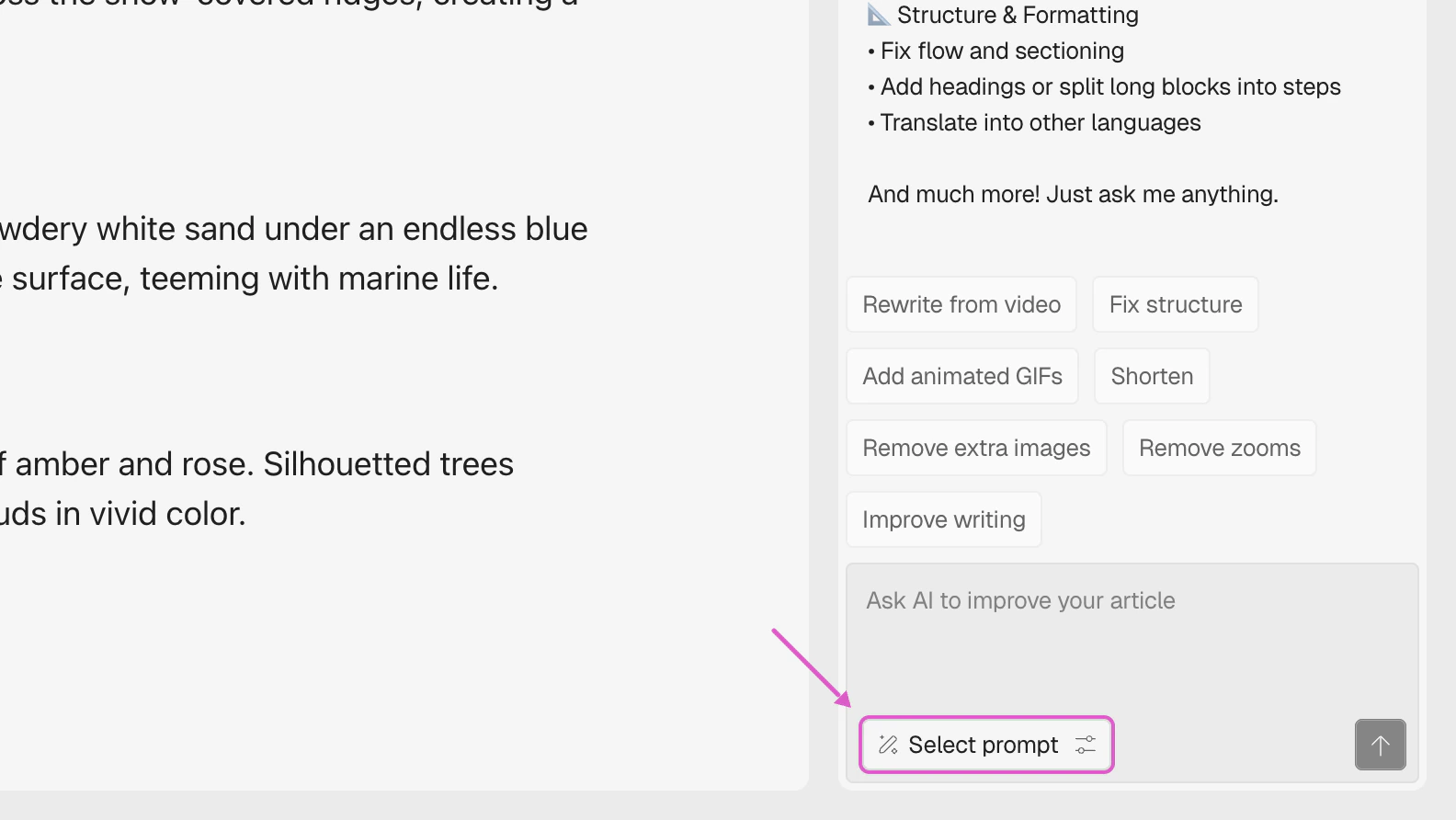
Using Prompts
1
View available prompts
The Prompt Hub shows all available prompts as cards. The currently selected prompt has a blue border. Clueso provides a default prompt (marked with a “Default” badge) that produces clear, well-structured articles.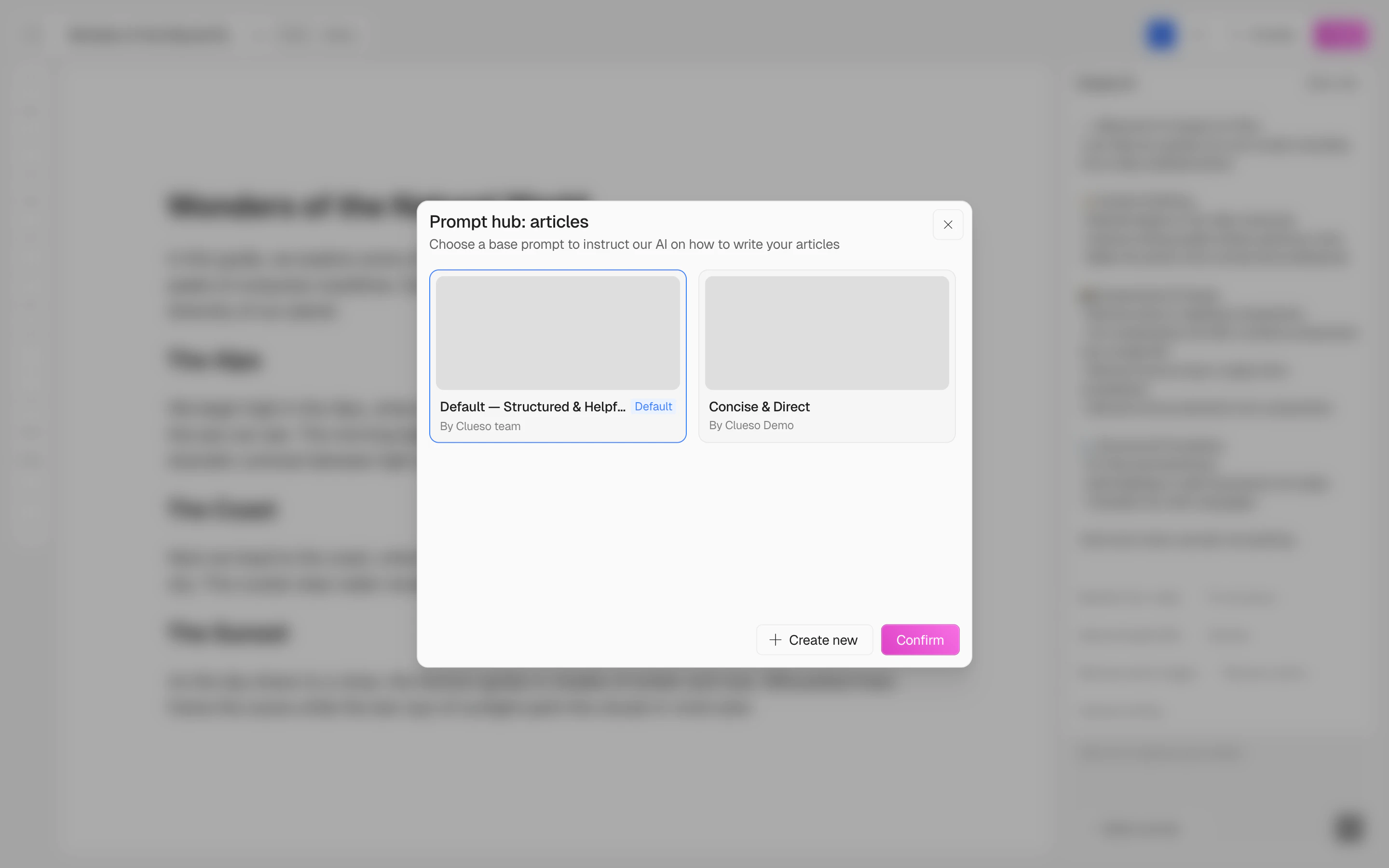
2
Select a prompt
Click on any prompt card to select it, then click Confirm to apply. The AI co-pilot will now follow that prompt’s instructions for all future responses in the chat.When you change the active prompt, the co-pilot automatically updates its approach — you don’t need to restart the conversation.
3
Create a new prompt
Click + Create new to open the prompt editor. Fill in: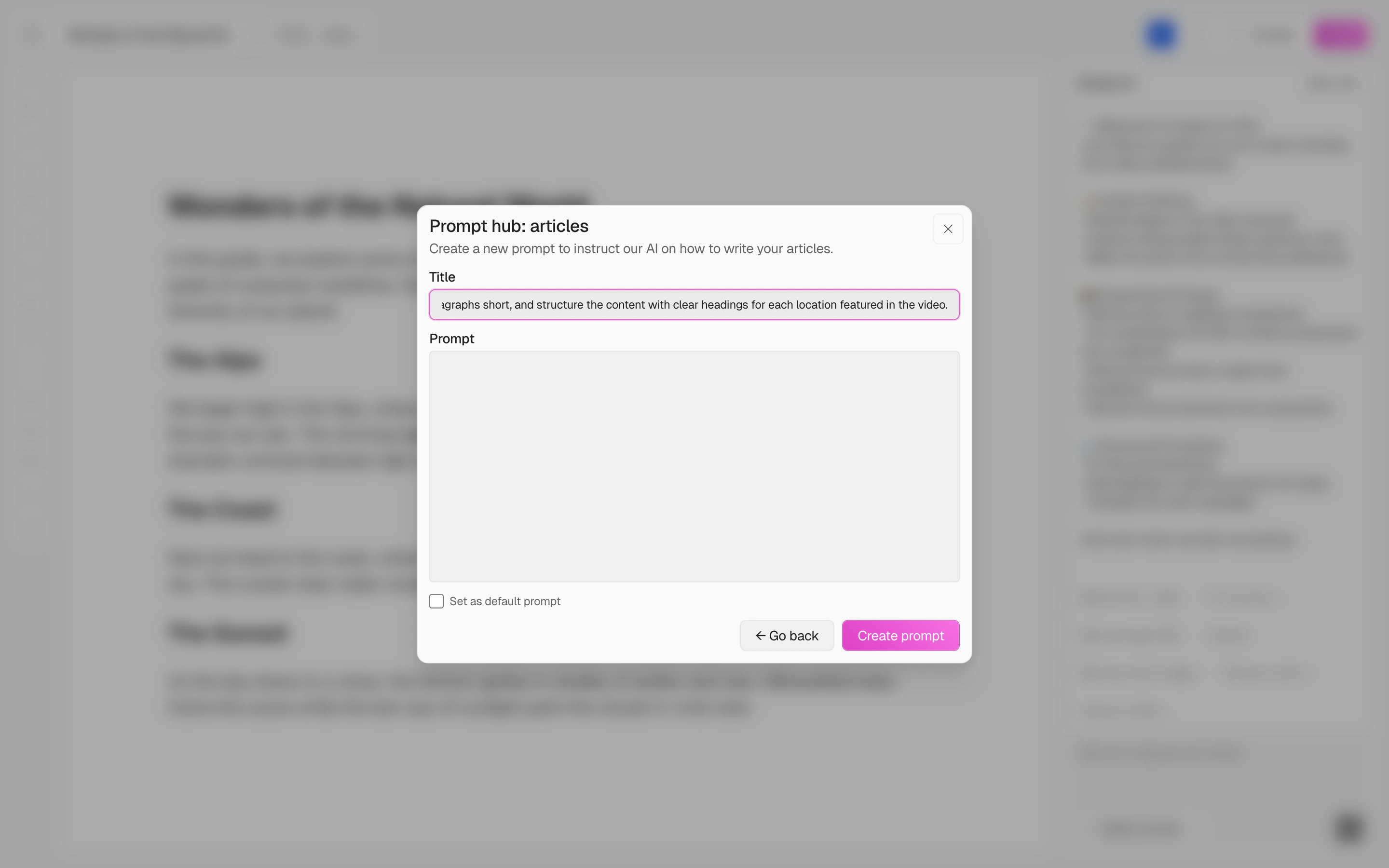
- Title — a name to identify when this prompt should be used (e.g., “Newsletter Style” or “API Reference”)
- Prompt — the instructions that guide the AI (tone, structure, formatting rules, etc.)
- Set as default prompt (optional) — makes this the default for all new articles
How Prompts Work with the Co-Pilot
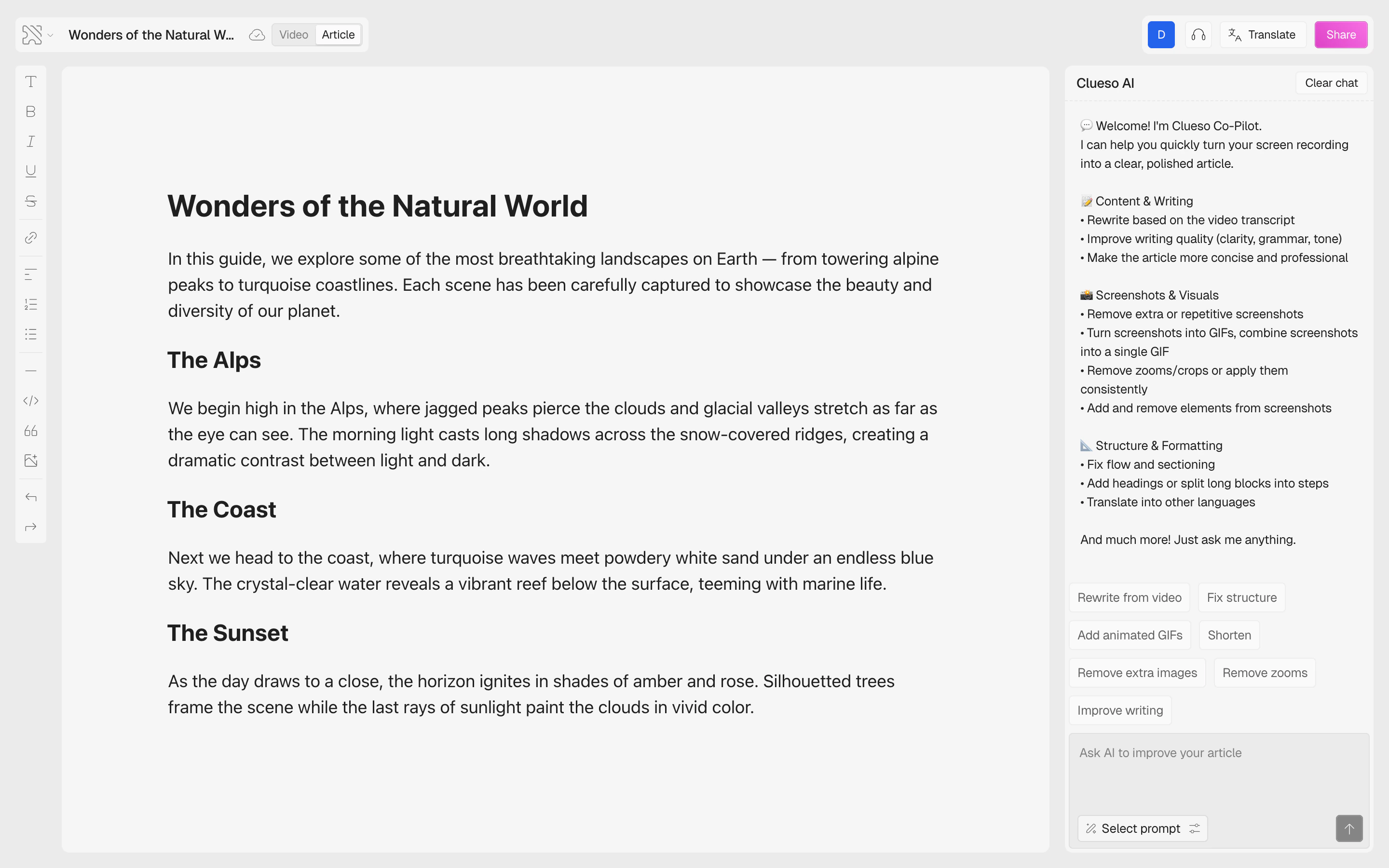
The Clueso AI co-pilot in the article editor uses your selected prompt as a baseline for all interactions. When you:- Click a suggestion pill (e.g., “Rewrite from video”, “Fix structure”, “Shorten”)
- Type a message in the chat
- Ask the AI to improve or restructure content
Managing Prompts
- Edit — click on a custom prompt card to modify its title or content. Pre-made prompts from Clueso are read-only.
- Delete — remove a custom prompt you no longer need
- Switch — change the active prompt at any time by opening the Prompt Hub and selecting a different card
Pre-made prompts (created by the Clueso team) cannot be edited or deleted, but you can always create your own to override them.
Best Practices
- Be specific about the style and structure — describe the formatting, heading style, paragraph length, and tone you want
- Write prompts like you’d brief a teammate — natural language works better than overly formal phrasing
- Create separate prompts for different documentation types (e.g., one for release notes, one for how-to guides)
- Focus on reusable rules — prompts work best for instructions you want applied consistently across articles